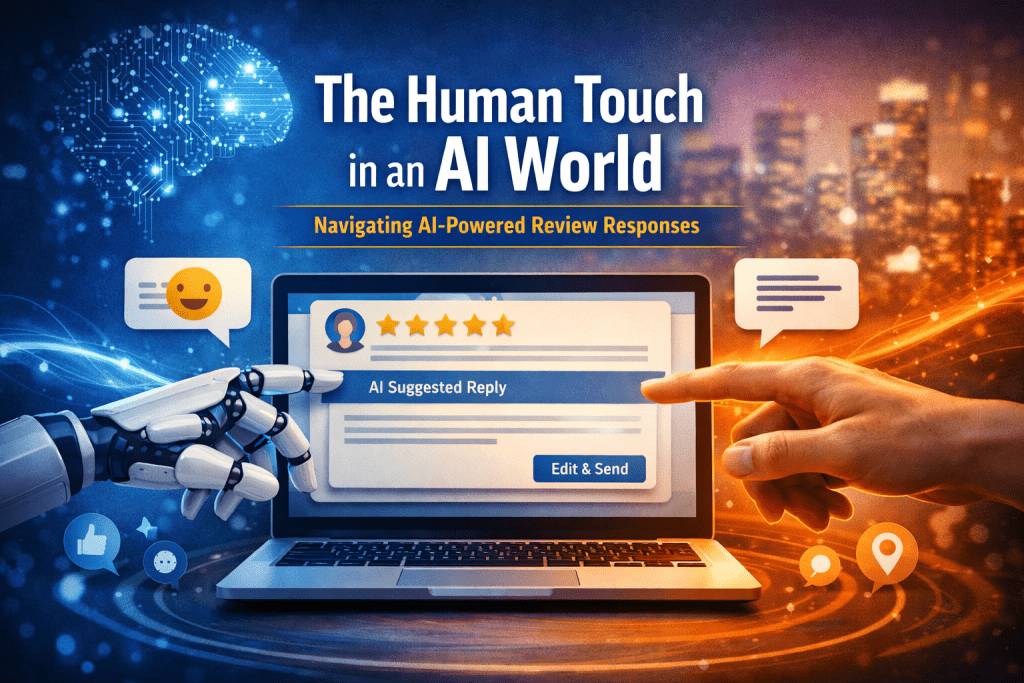
Google is quietly testing a new AI-powered feature that could reshape how businesses respond to online reviews. Through Google Business Profile, some businesses are being shown AI-generated reply suggestions for customer feedback. Owners can review, edit, and publish these drafts, making the process faster, but also raising bigger questions about authenticity, automation, and customer trust.
As tools like this become more common, businesses need to think carefully about how AI fits into their communication strategy. Convenience matters, but so does sounding genuine.
Why AI-Generated Review Replies Matter for Businesses
Google’s new feature is designed to make it easier for businesses to reply to reviews. When a customer leaves feedback on a Google Business Profile, the platform can generate a suggested response based on the content of the review. From there, the business can revise it and decide whether to publish it.
Although the feature is still being tested in selected markets, it signals a clear shift toward more automated customer engagement. For many businesses, that may sound like a welcome time-saver. Responding to reviews can be repetitive, especially for teams handling large volumes of customer interactions.
Still, efficiency should not come at the cost of sincerity. Reviews are often public moments of connection between a business and its customers. A response that feels too polished, generic, or robotic can weaken the very trust it is meant to build.
AI can be useful as a starting point, but customers still expect to hear from a real business that understands their experience.
Striking the Right Balance Between Speed and Authenticity
AI tools can streamline routine tasks, but they need human oversight. A draft generated by AI should never be treated as a finished response without review. Every message should still reflect the business’s tone, values, and approach to customer care.
A strong reputation is built through consistent, thoughtful engagement. If businesses rely too heavily on automation, they risk sounding distant or impersonal. Customers can often tell when a response feels templated, and that can make even a positive interaction feel less meaningful.
The best use of AI is as an assistant, not a replacement. A suggested draft can save time, but adding human judgment, context, and personalization is what turns a generic message into one that actually strengthens the relationship.
How This Could Affect Reputation Management and Local SEO
Customer reviews play a major role in how businesses are perceived online. They influence buying decisions, shape brand reputation, and can impact local search visibility. Responding to reviews shows that a business is active, attentive, and invested in customer experience.
That kind of engagement matters. Thoughtful replies can encourage more people to leave reviews, build credibility with potential customers, and reinforce trust in the brand. On the search side, regular activity on a Google Business Profile may also support stronger local visibility.
On the other hand, inconsistent or low-quality responses can do more harm than good. If replies feel automated or careless, they may weaken customer confidence rather than improve it.
Businesses should aim to use AI in a way that supports their reputation strategy, not one that dilutes it.
Best Practices for AI-Assisted Review Responses
Even when AI helps draft a reply, businesses should make sure the final message feels intentional and relevant.
Do not publish AI drafts unchanged.
Always review and refine suggested replies before posting them. The final response should sound like your business, not like software.
Keep your tone professional and respectful.
This is especially important when responding to criticism. A calm, measured reply shows maturity and demonstrates that your business takes feedback seriously.
Make it personal.
Referencing a specific part of the customer’s experience can make the response feel far more sincere. It shows that the review was actually read and appreciated.
Reply promptly.
Timely responses help customers feel heard. They also show prospective customers that your business is engaged and responsive.
AI Should Support Your Brand, Not Speak for It
As Google continues introducing more AI features into business tools, companies need to stay intentional about how they use them. Automation can improve efficiency, but the strongest customer relationships are still built on authenticity.
Businesses that use AI wisely, as a support tool rather than a substitute for real engagement, will be in a stronger position to protect their reputation, strengthen trust, and stand out in a crowded market.
If you’d like, I can also turn this into a more polished blog-style article, a punchier LinkedIn post, or a more persuasive sales-page version.